Climate-friendly construction materials for interiors: How to build and renovate sustainably
Sustainable, energy-efficient, and climate-conscious construction is no longer optional—it’s essential. Especially in interior spaces—from subfloor construction to tile installation—the choice of materials significantly impacts a building’s environmental footprint. Choosing climate-friendly building materials here creates long-term value: for people, spaces, and the climate.
The choice of indoor building materials has a significant impact on the environmental footprint of a construction project. Sustainable construction involves using materials that are produced efficiently, low in emissions and are recyclable. At the same time, low-emission materials improve indoor air quality and contribute to a healthy living environment — an essential advantage, particularly for renovation projects. This creates durable solutions that actively support climate protection.
Sustainable building materials meet certain key criteria:
Raw material base: Regionally sourced, renewable or recycled.
Production: Low CO₂ emissions and energy-efficient processes.
Application: Safe and efficient to use.
Health: Low emissions, such as EMICODE® certification, ensure good indoor air quality.
The entire lifecycle matters – from raw material extraction to use and recycling. Find out more about Saint-Gobain Weber's sustainable product solutions and standards here.
Demand for recyclable building materials continues to grow. Even now, mineral plasters, clay-based products and mortars made from recycled materials offer genuine ecological advantages. They conserve resources while delivering high performance.
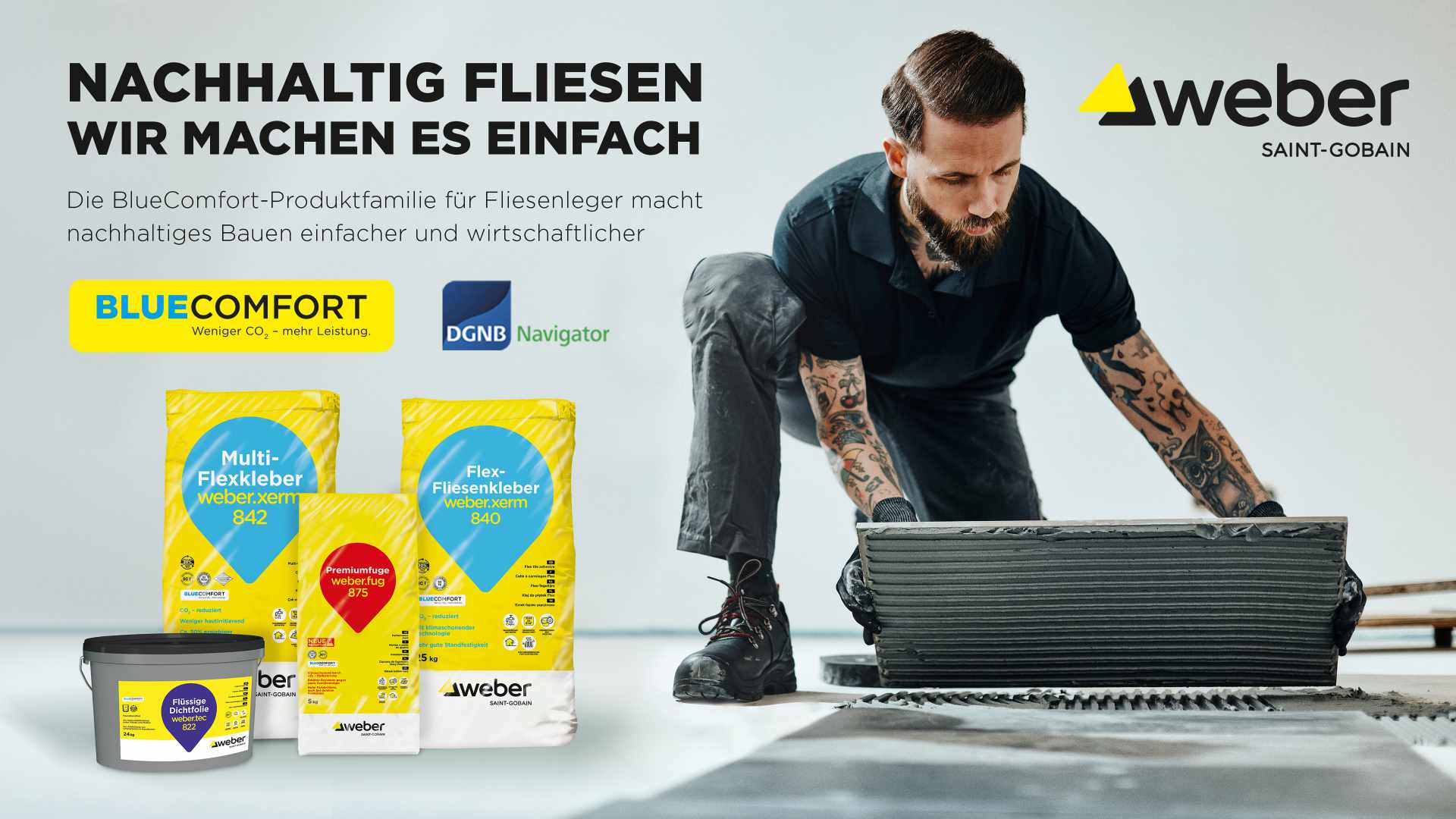
One example: The BlueComfort product family from Saint-Gobain Weber enables low-emission application with high performance and actively supports the raw material cycle. This significantly reduces the environmental footprint of your construction project.
While the combination of tiles and underfloor heating is popular, it places special demands on the materials used. Using sustainable tiles and low-emission adhesives can increase energy efficiency and reduce CO₂ emissions.
The BlueComfort product line offers adhesive and sealing systems specially developed for durable, climate-friendly tile installation. All products meet the high standards of the EMICODE® label and contribute to a healthy indoor environment.
Saint-Gobain Weber offers a comprehensive range of sustainable building products that are both environmentally friendly and easy to use. A standout example is the BlueComfort product family.
Since these CO₂-reduced tile adhesives were launched in 2012, around 25,000 tons of CO₂ have been saved — equivalent to approximately 3,255 delivery van trips around the equator.
The innovative formula with reduced cement content significantly lowers emissions without compromising product performance. Production takes place in a facility that has reduced its CO₂ output by 90% through the use of renewable energy and energy-saving processes.
Did You Know?
The product family includes four tile installation products, includingweber.xerm 840and weber.xerm 842 – flexible thin- and medium-bed mortars suitable for residential and wet areas, including those with underfloor heating.
All products are listed in the DGNB Product Navigator and certified as “very low emission” in accordance with GEV guidelines. The packaging is also sustainable: made from 100% or 30% recycled material and fully recyclable.
6. Conclusion: Build sustainably now with solutions from Saint-Gobain Weber.
Sustainable construction begins with selecting the right materials. Using low-emission, recyclable building products creates healthy indoor environments and actively contributes to climate protection. Saint-Gobain Weber supports you with innovative products and comprehensive consultancy services.
Want to learn more or find a tailored solution for your project? Get in touch with us!