The maximum allowed values on floors are following: ≤ 1 kN for point loads and ≤ 2 kN/m² for surface loads.
The compressibility of the used insulation materials must be < 3 mm.
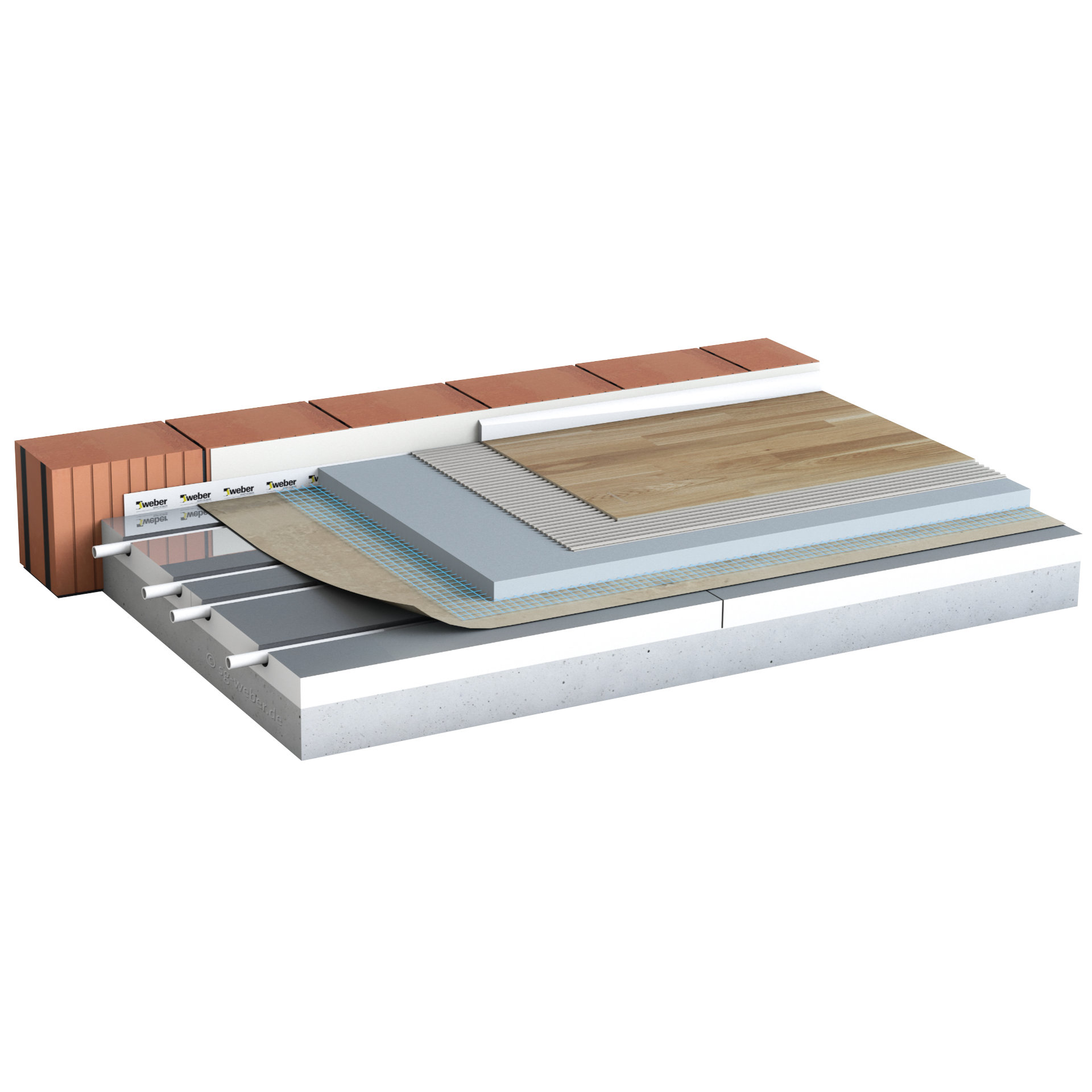
weber.floor 4310, weber.floor 4320 and weber.floor 4365 on warm water underfloor heating elements with heat-conducting metal plates.
The thin-layer underfloor heating constructions described in this recommendation sheet are special designs. The screed thicknesses may indeed deviate from the minimum layer thicknesses specified in standards.
The maximum allowed values on floors are following: ≤ 1 kN for point loads and ≤ 2 kN/m² for surface loads.
The compressibility of the used insulation materials must be < 3 mm.
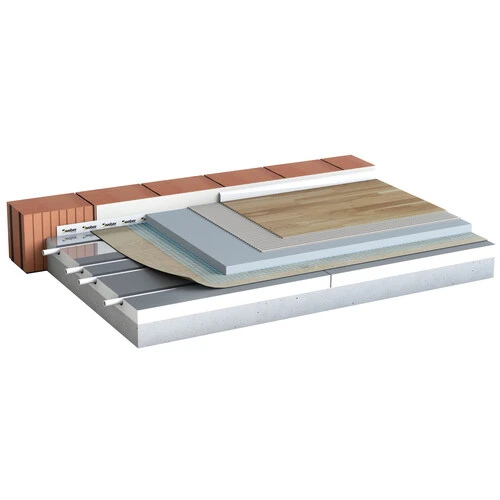
Normal-setting levelling compound for renovation and timber floors weber.floor 4310, thin-layer screed weber.floor 4365 or quick-setting levelling compound for renovation and timber floors weber.floor 4320
In case of floating constructions (separating membrane or insulation boards) with subsequent covering with ceramic tiles or stones, only use the 2-comp. tile adhesive weber.xerm 844 for the laying works. First, apply it as a scratch layer and afterwards as a thin-bed adhesive.
As an alternative the waterproofing and de-coupling membrane weber.tec 826 can be glued with weber.xerm 844 (applied in 6 mm thickness with a notched trowel) on the thin-layer screed. Afterwards tiling works are carried out with the multi-use tile adhesive weber.xerm 861. The maximum adhesive bed thickness is 5 mm. The maximum thickness of tiles is 10 mm. For weight distribution, use 15 x 15 cm ceramic tiles. They should be laid with cross joints and not in a half-offset formation. During functional heating and throughout the heating period, the maximum flow temperature must not exceed 40°C.