Reducing CO₂ emissions

Although sustainability cannot be reduced to the avoidance of CO₂ emissions alone, it is a crucial building block. The construction industry is responsible for 30% of global CO₂ emissions. As part of this industry, we aim to be part of the solution.
Together with our parent company, Saint-Gobain, we have set ourselves a clear goal:

Weber will achieve climate neutrality by 2045, meaning zero tonnes of CO₂ emissions.

At first glance, the timeline may seem (too) long, but the construction industry is not the insurance or financial sector. While switching to LED lighting and green electricity might be enough to achieve carbon neutrality in other industries, we transport large volumes of raw materials and goods every day. The challenges we face are significantly greater, and achieving large-scale CO₂-neutral production of building materials within the set timeframe is an ambitious goal. However, we are firmly committed to making it happen.

Determination alone is not enough—we need a roadmap. The first step is to reduce CO₂ emissions by 20% by 2030, based on 2017 as the reference year. By 2022, Weber had already made progress, reducing its carbon footprint by 10,000 tonnes per year. Any remaining non-reducible emissions will be climate-compensated by 2045 through appropriate measures.

To reduce CO₂, we are turning many dials. Here are a few examples:


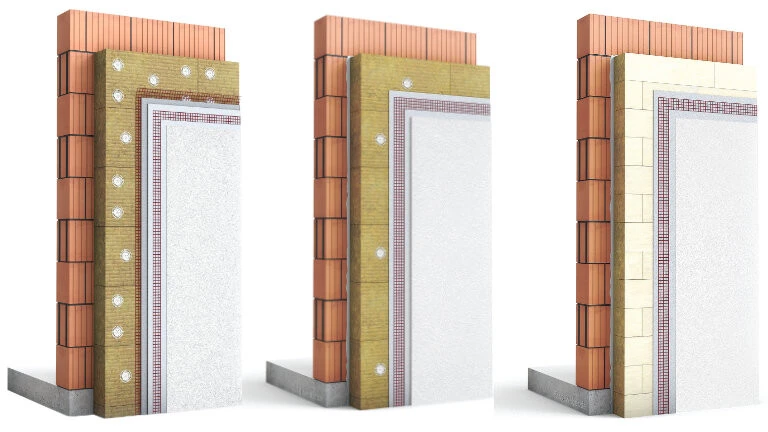
Systemgrafiken von drei WDV-Systemen

What do we produce?

We are particularly proud that many of our products actively contribute to climate protection, most notably our external thermal insulation composite systems (ETICS). Over their 40-year lifespan, these systems save significantly more energy than is consumed during their production.
Without Weber’s ETICS solutions, the energy-efficient renovation of existing buildings — which account for around 30% of CO₂ emissions — would progress much more slowly. This means that our formulations and production processes are becoming increasingly low in CO₂, and our insulation systems are making a continuous, active contribution to climate protection across millions of square metres of façade.
In this regard, our climate protection impact differs fundamentally from that of a vehicle manufacturer, for example. However, we do not include this contribution in our own CO₂ balance.

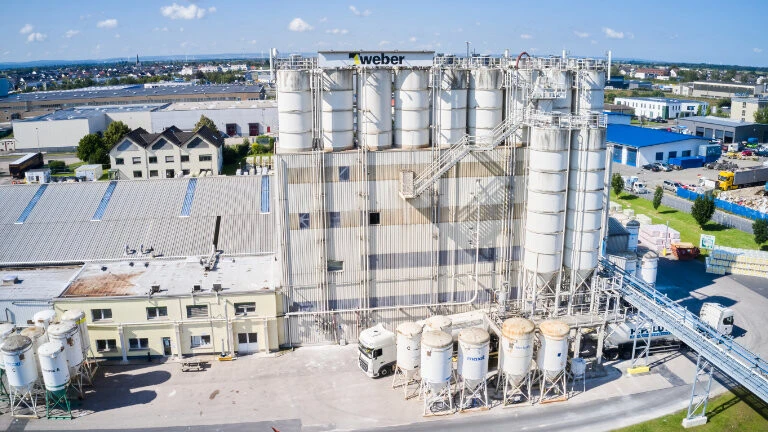
Aufnahme des Werks in Weilerswist

What are our products made of?

Our research and development department is working intensively to reformulate our building materials, replacing CO₂-intensive raw materials with more sustainable alternatives. Cement is at the forefront of this effort, as its production generates a significant amount of CO₂.

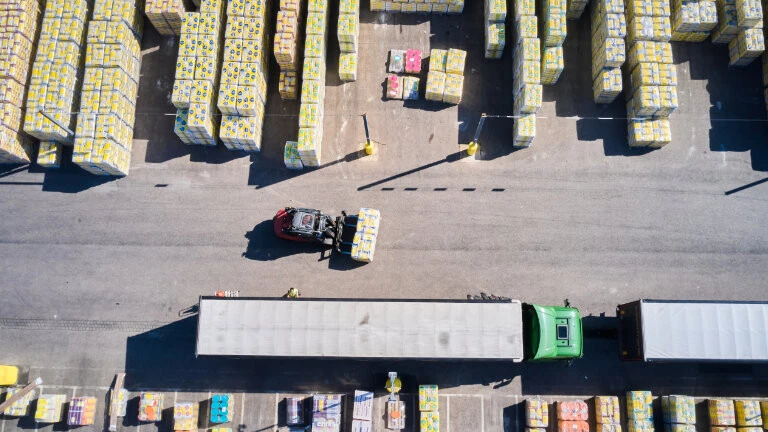
Ansicht von einem Außenlager von oben, wo gerade ein LKW beladen wird

How and where do we produce?

We are committed to continuously optimising our production and delivery processes to reduce CO₂ emissions. For instance, we use electricity from renewable sources and minimise transport distances. Compared to other industries, our manufacturing processes are relatively energy-efficient, as our production does not require the melting of raw materials, a process that typically involves high energy consumption.
Nevertheless, we continue to strive for improvement. With 13 production sites across Germany, our transport routes to customers are short in theory. However, not every product is manufactured at every site.

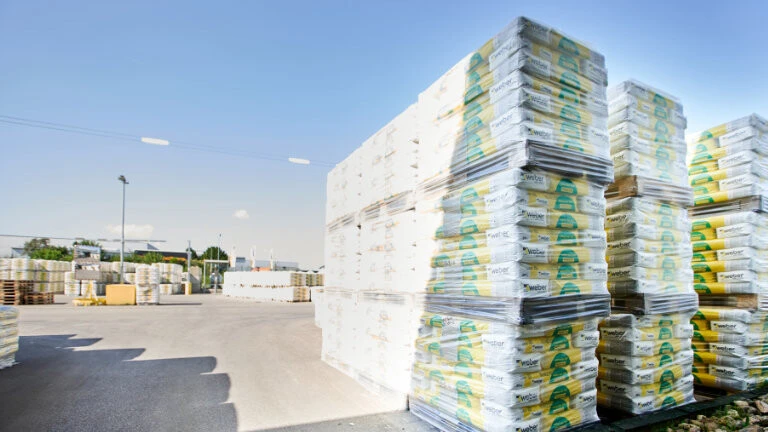
Produkte sind im Außenlager auf der Palette gelagert

How do we provide information?

We are working on collecting and publishing the CO₂ footprint and other sustainability indicators for each of our products. This is a complex task as it involves the raw materials used, their transport routes and the energy consumed during production, as well as the product’s lifespan and recyclability. These parameters are constantly evolving.
As we manufacture over 800 products, we are initially focusing on key priority products.