"A Long Journey"
7 Questions for Dr. Benjamin Krebs, Managing Director of Saint-Gobain Weber
7 Questions for Dr. Benjamin Krebs, Managing Director of Saint-Gobain Weber
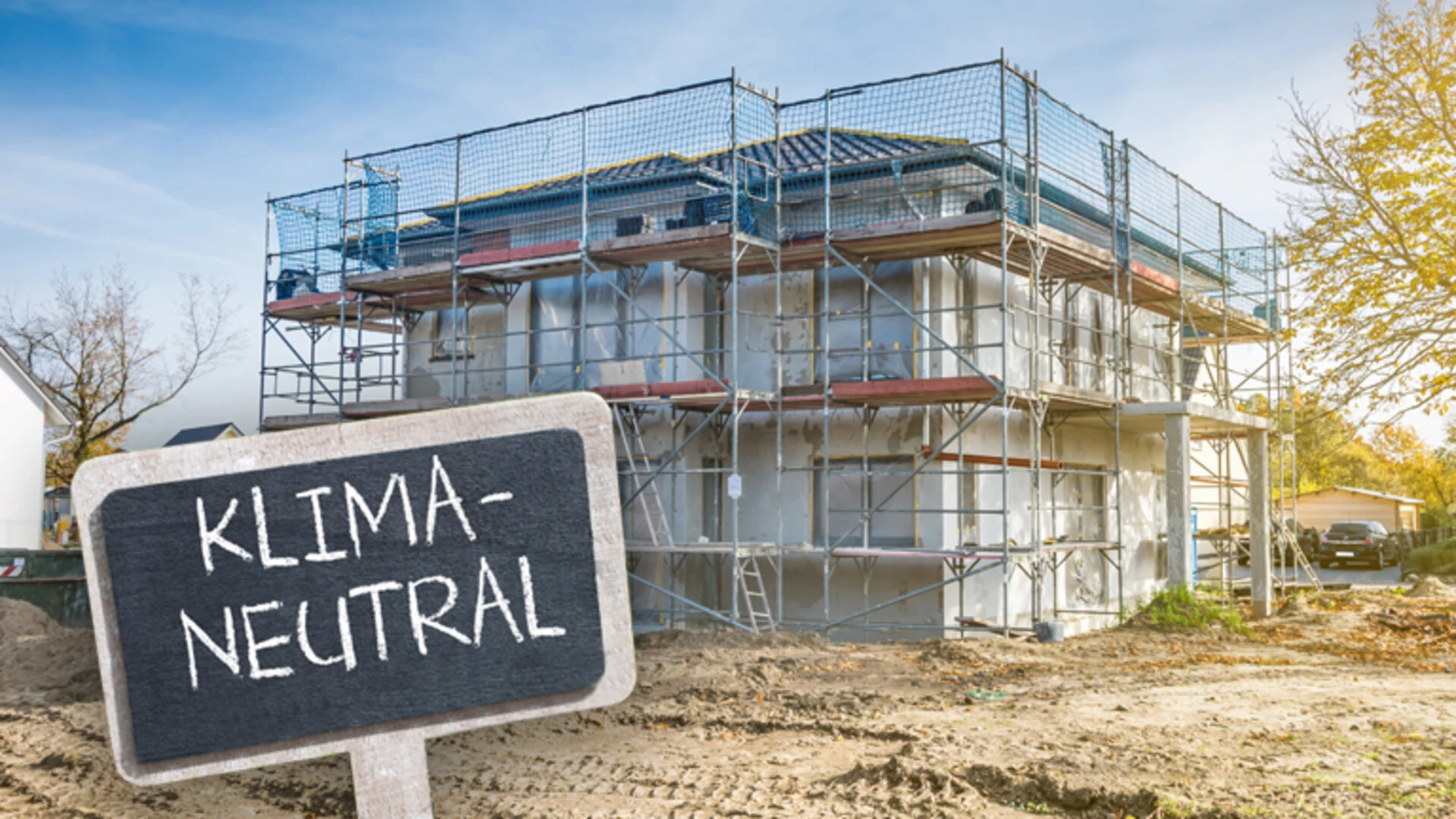
Benjamin Krebs: At first glance, fully utilising the legal timeframe may not seem like an ambitious goal. However, we operate in the construction industry, which is a highly resource- and energy-intensive sector. This is in no way comparable to a start-up in the IT or finance sectors. We are embarking on a long journey, so we have chosen a realistic timeline to reach our goal. The construction industry also offers significant leverage, moving enormous volumes every day. Improving these processes will have a greater impact than one person separating waste for a lifetime. I'm not going to sugarcoat anything, but we mustn't forget the transformation that has already taken place: just ten years ago, the idea of a building materials manufacturer becoming climate neutral would have been dismissed as completely utopian — today, however, we are working towards this goal.
Benjamin Krebs: We have been focusing on sustainability in product development for quite some time. For example, we introduced AquaBalance technology in 2011, long before the Paris Climate Agreement and Fridays for Future. Some of our initiatives may have been ahead of their time: our CO₂-reduced BlueComfort tile adhesives, launched in 2012, received little interest from tilers as they simply weren’t aware of the issue at the time. Thanks to our AquaBalance plasters, we have already saved more than 82 tonnes of biocides. In 2019, we launched the first recyclable external thermal insulation composite system: weber.therm circle. This marks the beginning of a raw material cycle in an area that has traditionally generated enormous amounts of landfill waste. Many of our systems carry the Blue Angel label, and some have received prestigious awards such as the German Federal Ecodesign Award or the Innovation Award for Climate and Environment.
Back in 2018, we and our parent company Saint-Gobain committed to the goal of achieving CO₂ neutrality in Germany by 2045 and globally by 2050. In 2019, we initiated a systematic review of our product portfolio and processes. Since then, a steering committee comprising members of the executive management team has been meeting regularly to consolidate information on the status of our sustainability activities and adjust the measures accordingly as necessary.
Benjamin Krebs: We already have EPDs for the majority of our products at the association level. These provide verified sustainability documentation, offering an initial point of reference for a product group. This is both necessary and welcome. Additionally, individual EPDs can be created for specific products or systems.
Creating individual EPDs is particularly complex, especially for systems. EPDs are highly technical documents spanning 15–20 pages of data and descriptions, which are only meaningful to experts in the field. For this reason, we only use individual EPDs selectively, rather than supplementing our product technical data sheets with a few concise sustainability metrics. We believe this approach provides greater transparency for most users.
Benjamin Krebs: To make the most efficient and comprehensive use of the substantial funding currently provided by the EU and the German government for energy-efficient renovations, it would make sense to encourage the use of environmentally friendly building materials in certain circumstances. This would not only support energy-efficient renovations, but also evaluate the materials used in the process. While many municipalities are already doing this, standardised regulations would be beneficial. However, we don't just want to criticise politicians — we also want to consider what we as a company can do today.
Benjamin Krebs: This is a good example of why it’s worth taking a closer look or asking questions. The bags commonly used on construction sites for dry mortar are not usually made of paper alone, but rather of a composite of thick paper and very thin plastic film. These are harder to recycle than bags made of pure plastic film. We collect film packaging and send it for recycling via a specialist service provider. As with everything, the prerequisite is that they are returned sorted by type. There’s definitely room for improvement in this regard within the construction industry.
Many sustainable practices often go unnoticed. For instance, we deliver most of our dry mortar to construction sites in silos, and our flooring products using weber.floor PumpTrucks. Although reducing packaging is a widely discussed topic, we have already implemented an effective reusable system that saves many tons of bags and buckets each year.
Benjamin Krebs: That’s true, and we’re not shying away from it. However, we must continue to have the opportunity to operate profitably. Although sustainable development includes stable economic conditions, these should not be at the expense of the environment. Given Weber's proven capacity for innovation, I am confident that we can reconcile ecological and economic needs.
Benjamin Krebs: Offsetting the damage we cause in one area by compensating for it in another achieves nothing in the long run. We need to fundamentally change our mindset, which will inevitably lead to different consumption and production behaviours. That’s why our approach is clear: we prioritise avoidance and reduction over compensation. We will only implement offsetting measures as a last resort, once we are certain that we have fully exhausted our potential for innovation and reduction. We are still far from that point.