What does DGNB certification stand for?
A sustainability certification from the German Sustainable Building Council (DGNB) demonstrates a building's quality across six key areas: ecology, economy, processes, sociocultural and functional aspects, technology and location.
The criteria vary depending on the building type and are constantly being refined. The DGNB offers certification for buildings, districts and interior spaces.
The DGNB system is based on three core principles: life cycle assessment, holistic evaluation and performance orientation. It therefore considers the entire life cycle of a building. The three sustainability categories — ecology, economy, and sociocultural aspects — are given equal weighting in the overall assessment.
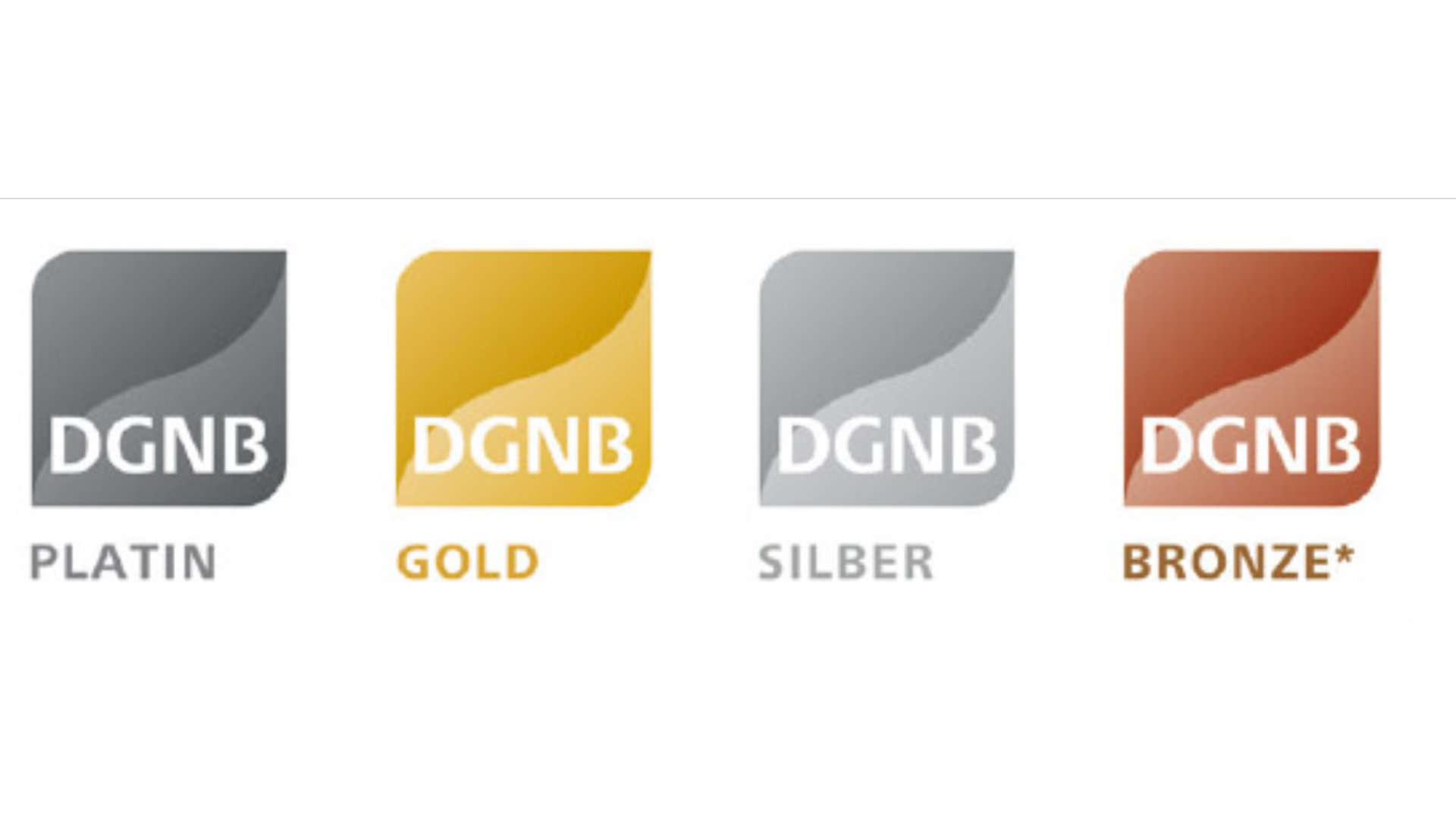
In Germany, certification by the DGNB (German Sustainable Building Council) is widely recognised as a mark of excellence in sustainable construction. Depending on how well the criteria are met, certificates are awarded at different quality levels: Platinum, Gold and Silver. In certain cases, such as for sustainable building operations or existing buildings, Bronze may also be awarded.
To achieve Gold certification, for example, a building must meet a minimum fulfilment level of 50% and an overall fulfilment level of 65%.