An Environmental Product Declaration (EPD) consists of six sections, each containing different types of information and data.
This includes general information, product data, calculation rules, scenarios, and additional technical details from the life cycle analysis, as well as the results and interpretation of the analysis.
Structure of an EPD
This section contains the declaration number required for documenting the EPD. It also includes the reference quantity to which the EPD relates and the limits of its validity.

The product data section of an Environmental Product Declaration (EPD) contains the following information:
- Product description/Product definition
- Application
- Technical Data
- Application limits
- Delivery status
- Ingredients
- Manufacture
- Environmental and health aspects during manufacturing
- Product processing/installation
- Packaging
- Condition of use
- Environmental and health aspects during use
- Reference service life
- Extraordinary effects
- Recycling
- Disposal
- Further information
The product description helps to classify the product according to the rules of its product category.
A worst-case approach is used for technical data to ensure the reliability of the information.

The reference quantity used for the life cycle analysis is specified once again in the calculation rules section of an Environmental Product Declaration (EPD).

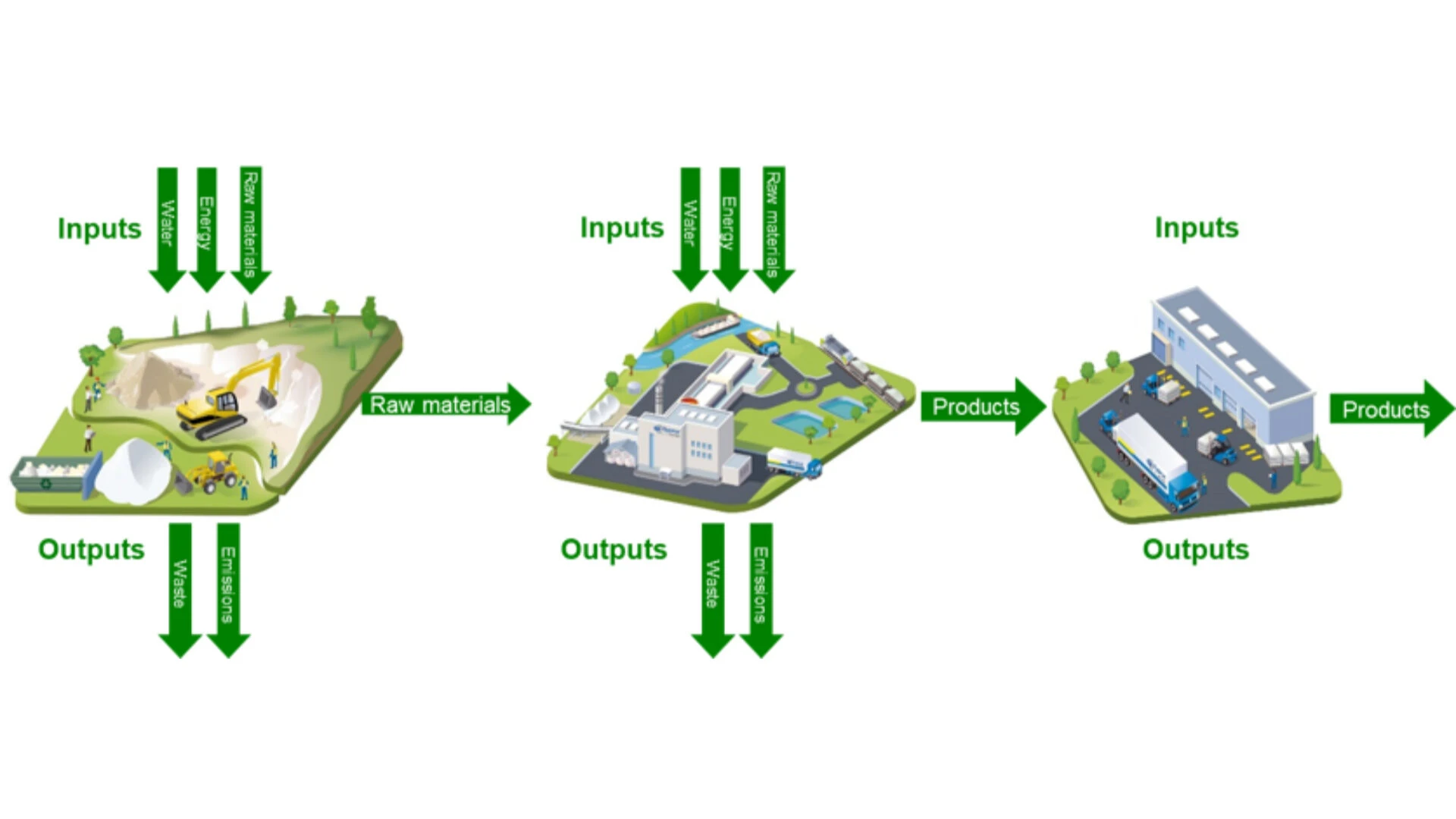
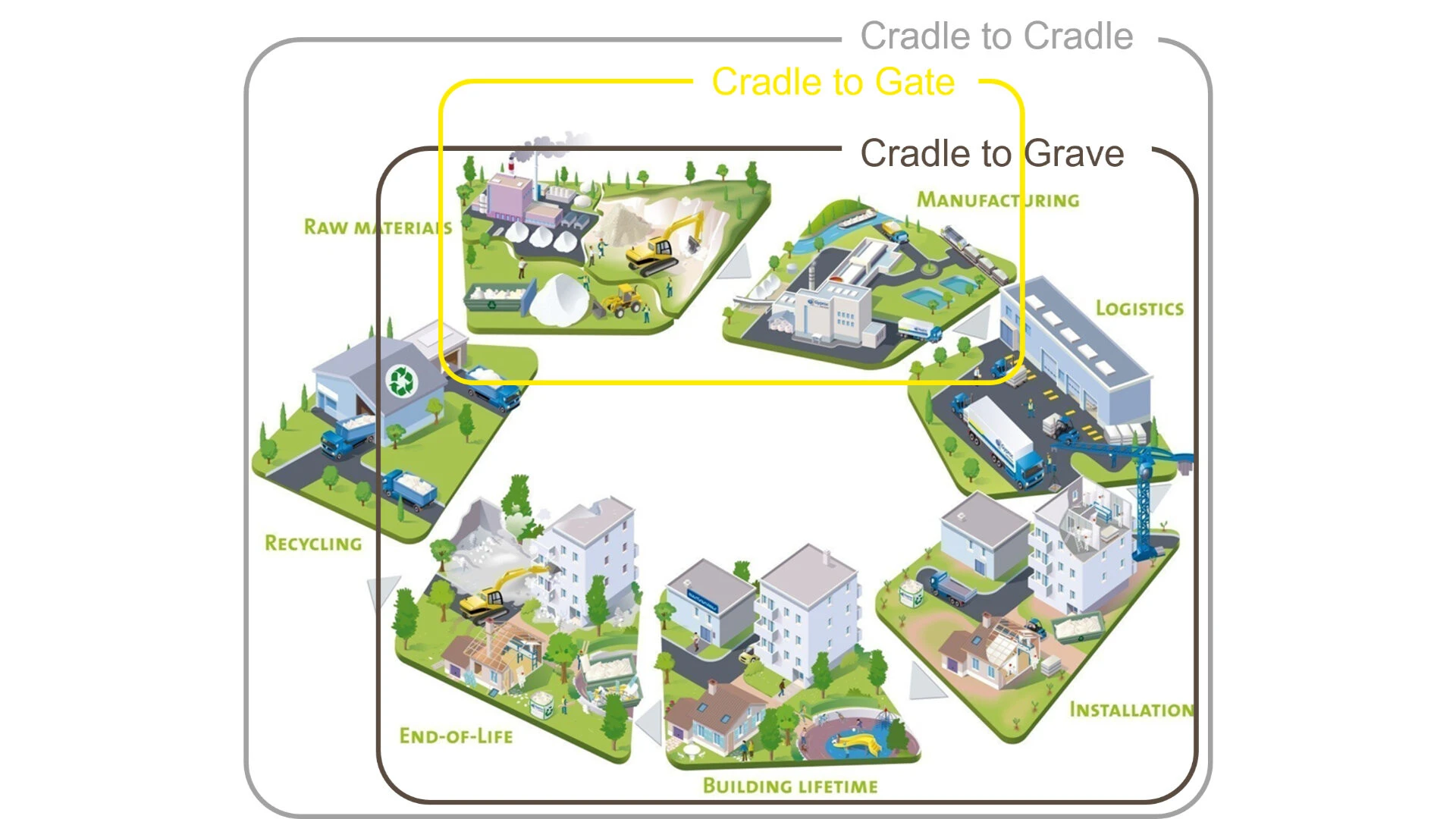
This section of the EPD provides information about the building's life cycle, as well as transport and application parameters. It includes data on fuel consumption, transport distances, truck load utilisation, water usage on the construction site and material consumption.

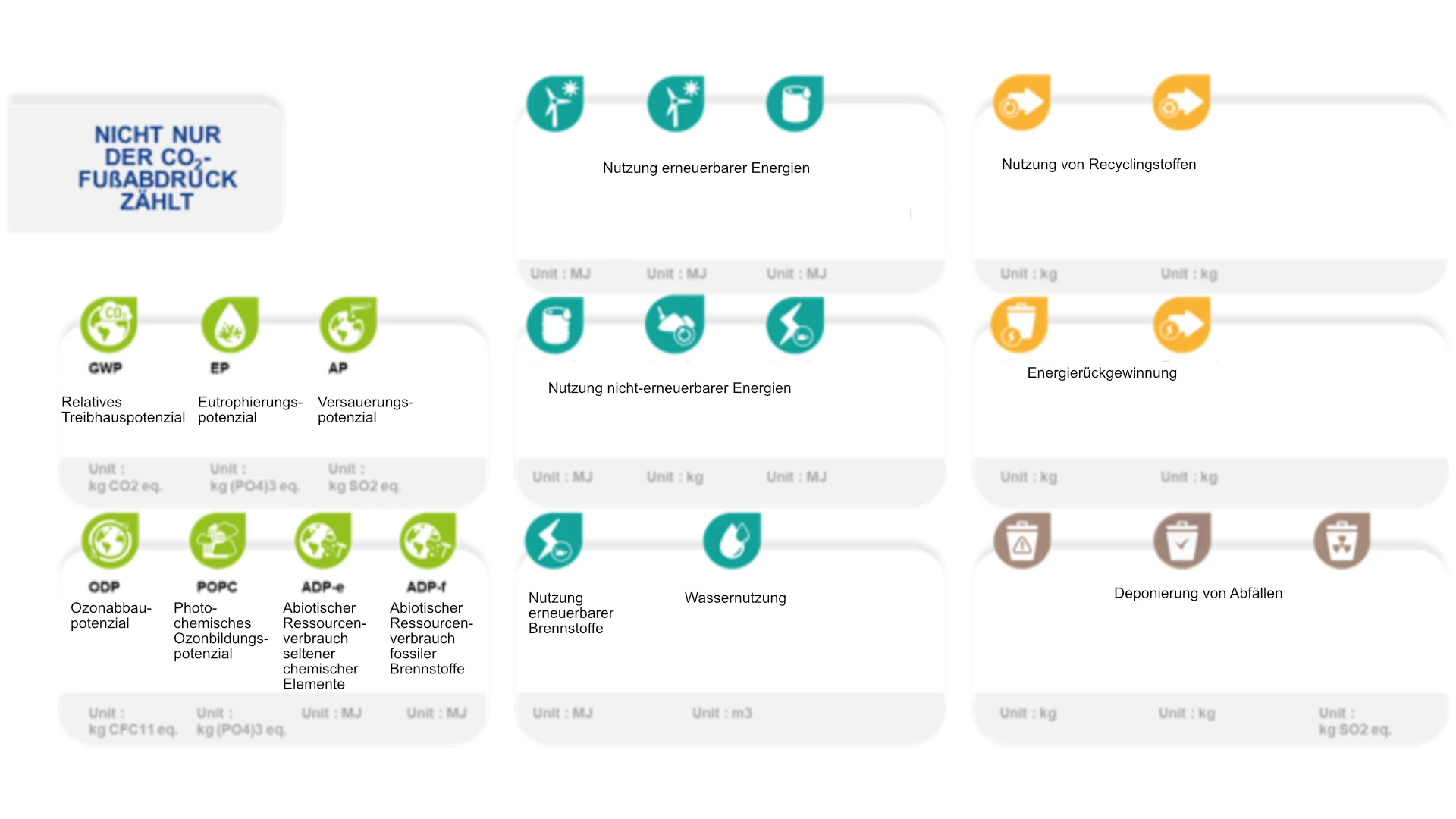
The results of the life cycle analysis form the core of an Environmental Product Declaration (EPD). This section summarises all relevant data and breaks it down into the different stages of the product's life cycle. For construction products in particular, the product stage is critical, as this is where the Global Warming Potential (GWP) — the CO₂ footprint — has the greatest impact.

Interpreting the life cycle analysis is the final step in creating an EPD. In the case of association-based EPDs, however, the interpretation of the data is often quite superficial. As this section does not include absolute values, comparing two EPDs is generally not meaningful.

Comparing product EPDs
Comparisons of product EPDs from different manufacturers are only valid if the same EPD type is used and the same version of the standard is applied. The following criteria must also be met:
- same scope of validity
- the same product definition (according to the EN standard)
- identical technical construction data
- same declared unit
- the validity period has not expired.
Only when these conditions are met can meaningful conclusions be drawn from comparing product EPDs to determine which product is more environmentally friendly.