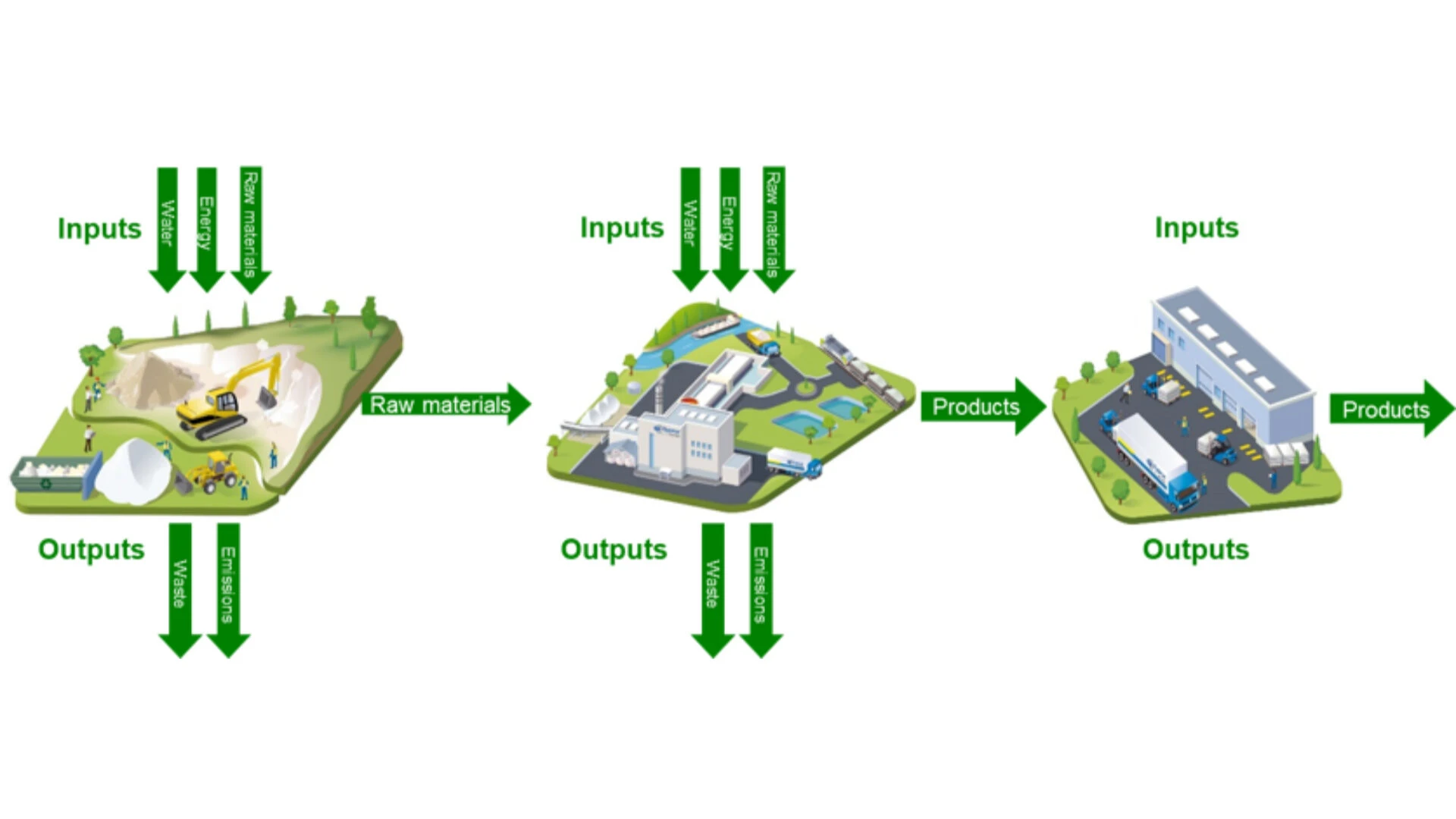
All material flows must be taken into account when conducting a life cycle analysis
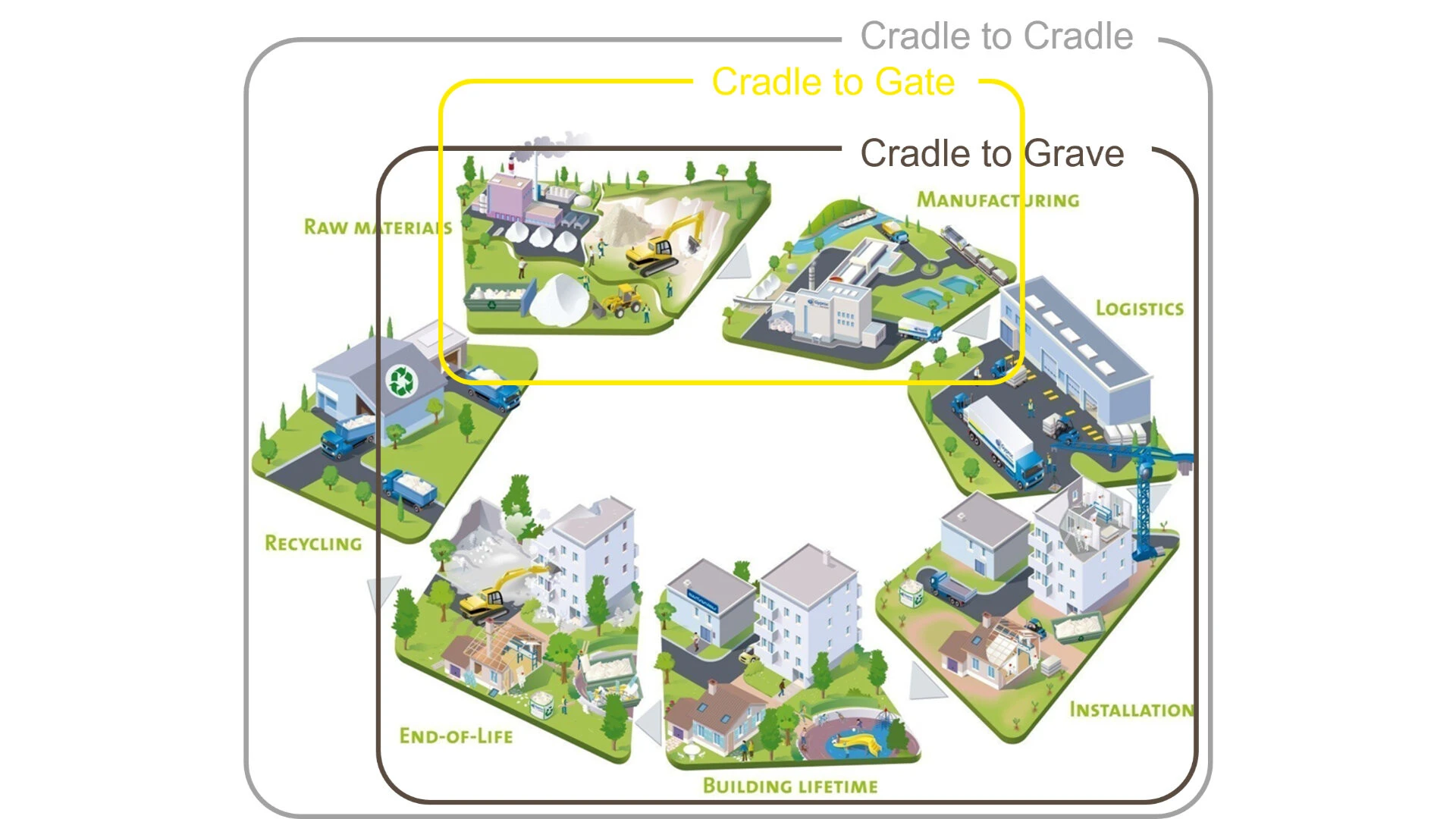
When creating an EPD, the entire life cycle of a product is analysed by examining all material flows.
This generally includes 5 phases:
- Manufacturing of the products
- Construction of the building using the products
- The use phase of the building
- Disposal of the products
- Recycling of the products
Creating an EPD for construction products
For construction products, steps one to three are the most significant, as the material subsequently takes on an almost inert role.
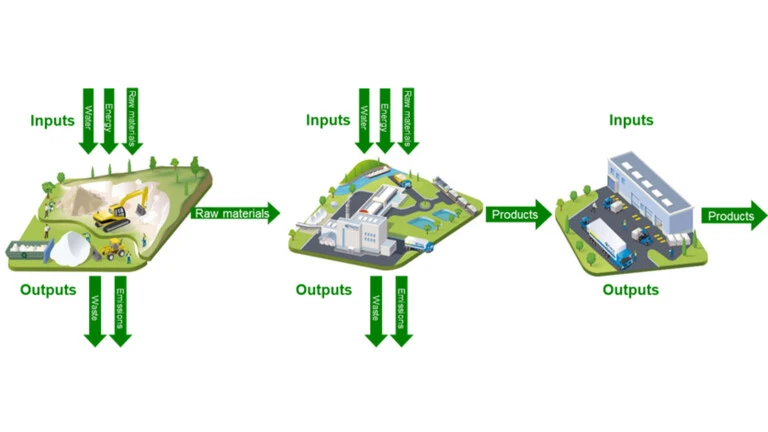
The EPD for raw materials considers the extraction of raw materials, the mining process and transportation. Additional factors, such as energy consumption and waste management during production, are included in the product EPD. An EPD is also available for systems comprising multiple products with a system approval. The building assessment is derived from the sum of all EPDs.
Types of EPDs
Specific EPD
A specific EPD refers to a particular product from a specific manufacturer. It contains detailed information about the environmental impacts of that specific product.
When an EPD is created, it includes data from one product produced at one manufacturing site.
Average EPD
The average EPD is based on an average assessment of a product or group of products. It is often used when it is difficult to collect specific data for each individual product within a category. EPDs are created using data from similar products from one or more production sites of one manufacturer.
Representative EPD
A representative Environmental Product Declaration (EPD) is based on data from selected products within a product group that are considered representative of the entire group. It provides a balanced overview of environmental impacts, eliminating the need to evaluate every product in the category individually.
To create it, data is collected from one product from one or more of a manufacturer's production sites, which then represents the entire product group.
Model EPD
A Model EPD is a general type of EPD created using data from similar products from multiple manufacturers at one or more production sites. It is the least specific form of EPD.
Model EPDs are the standard in Germany, while manufacturer-specific EPDs are rare.