What is an EPD?
An Environmental Product Declaration (EPD) provides verified, objective data on a product’s environmental impact
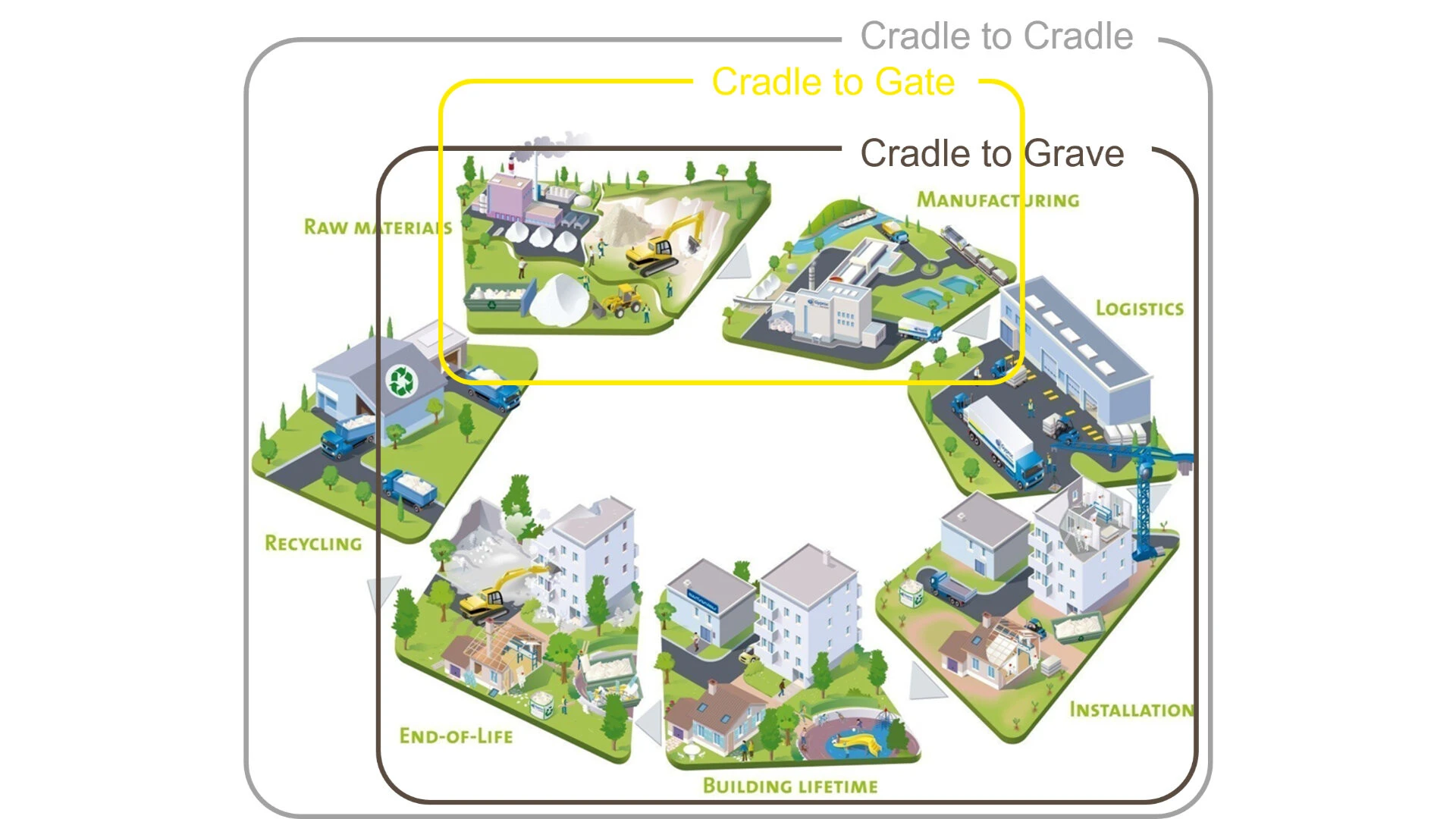
An Environmental Product Declaration (EPD) is a document that presents the environmentally relevant characteristics of a specific product in the form of neutral, objective data. This data should comprehensively cover all the potential impacts the product may have on the environment. Ideally, the entire life cycle of the product is considered.
The data in an EPD is based on actual production figures and is standardised. This means that generalised information is not permitted and EPDs within a product group always adhere to the same structure, as defined by the standardised Product Category Rule (PCR). External certification ensures compliance with these rules and verifies the data.
An EPD provides a basis for evaluating products at a building level, enabling products to be compared in terms of their environmental impact. A life cycle analysis considers all stages of a product's life.