Extension of the previous protection targets includes protection of socket parts against fire
The prevailing structural fire protection measures are focused on fire protection in residential rooms, i.e. they primarily serve to prevent fires from spreading from the inside of the building to the façade. The whole facade is considered. The regulations that provide for either lintel protection above every opening in the outer wall or horizontally surrounding fire barriers on every second storey remain in place, as they have proven to be effective.
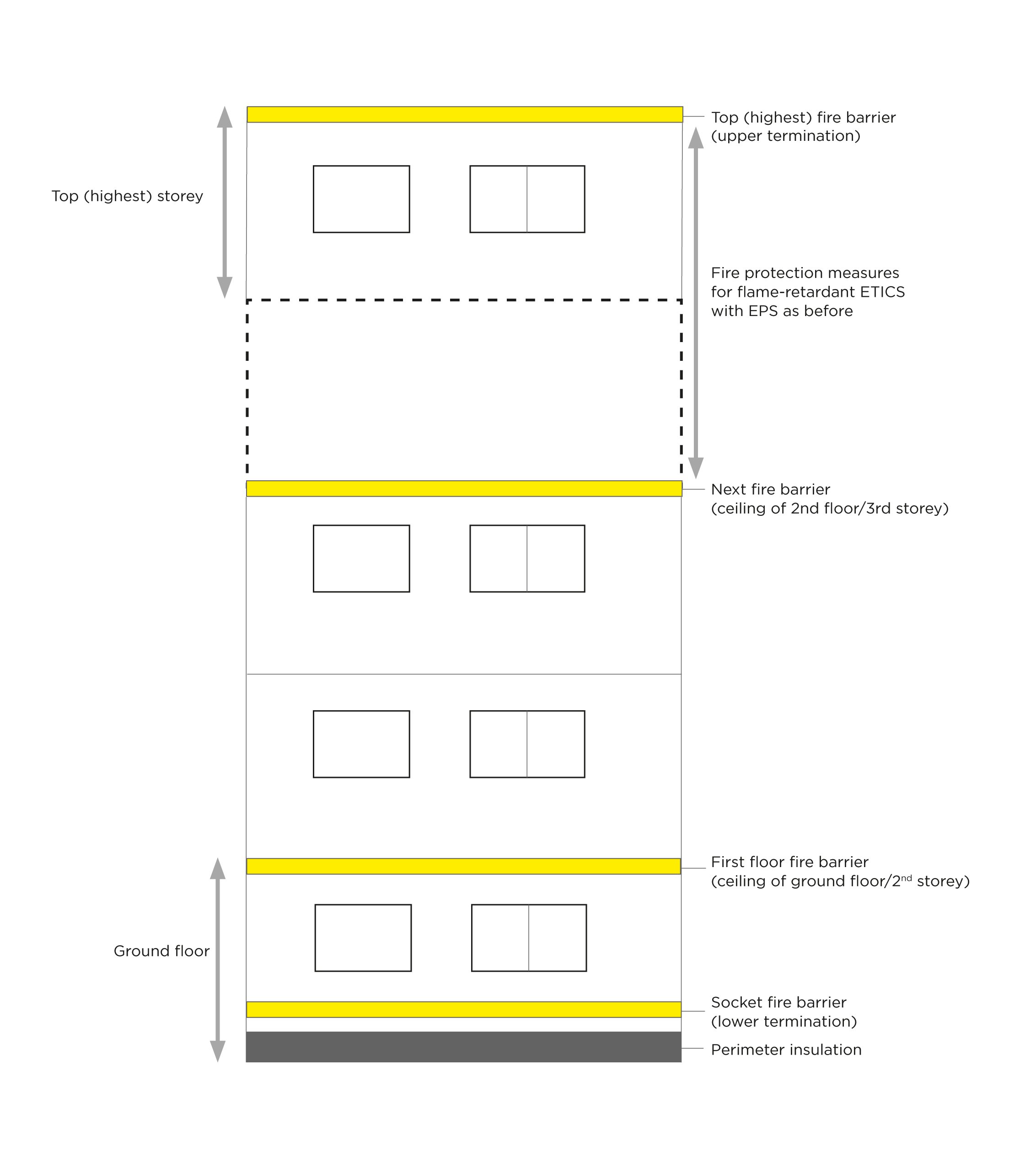
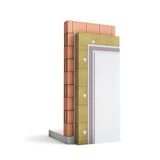
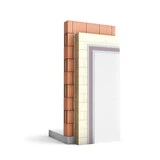
The new regulation incorporates a further hazard scenario into the structural fire protection of ETICS: the "socket fire", where a fire load is assumed to be carried towards the facade from the outside at the ground connection area. For this reason, additional fire protection measures in the form of fire barriers will have to be taken in future in order to create a protection zone between the socket part of the building and the third storey, regardless of the thickness of the insulation material. This is intended to prevent fires, such as those involving parked vehicles, rubbish containers or bulky waste, from spreading to the buildings. A total of three additional fire barriers are installed in the socket area all around the building; the first at the lowest part of the ETICS, the second at the height of the ceiling of the first storey and the third at the height of the ceiling of the third storey.
The current regulation therefore requires additional fire barriers of mineral wool for all insulation thicknesses (one fire barrier at the socket part, one fire barrier between the ground floor and first storey, one additional fire barrier between the second and third storey and one fire barrier at the upper top).
Escape and rescue routes, such as passageways, arcades and external staircases also require special attention. These should generally be equipped with non-combustible insulation and a mineral render system. The same applies to soffits (e.g. garages, arcades, recesses, balconies, loggias).
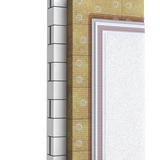
Fire barriers in ETICS must be constructed or bridged with non-combustible insulation materials. The vertical fire barrier must be at least 200 mm wide and extend beyond the thickness of the firewall. The exact position of the firewalls must be determined in advance of construction or specified by the construction management. This is regulated in § 30 of the Model Building Code (MBO). Region-specific deviating requirements for the design of fire flashovers are possible. For full information request technical advice or refer to the Technical System Information No. 6 of the German ETICS Association.