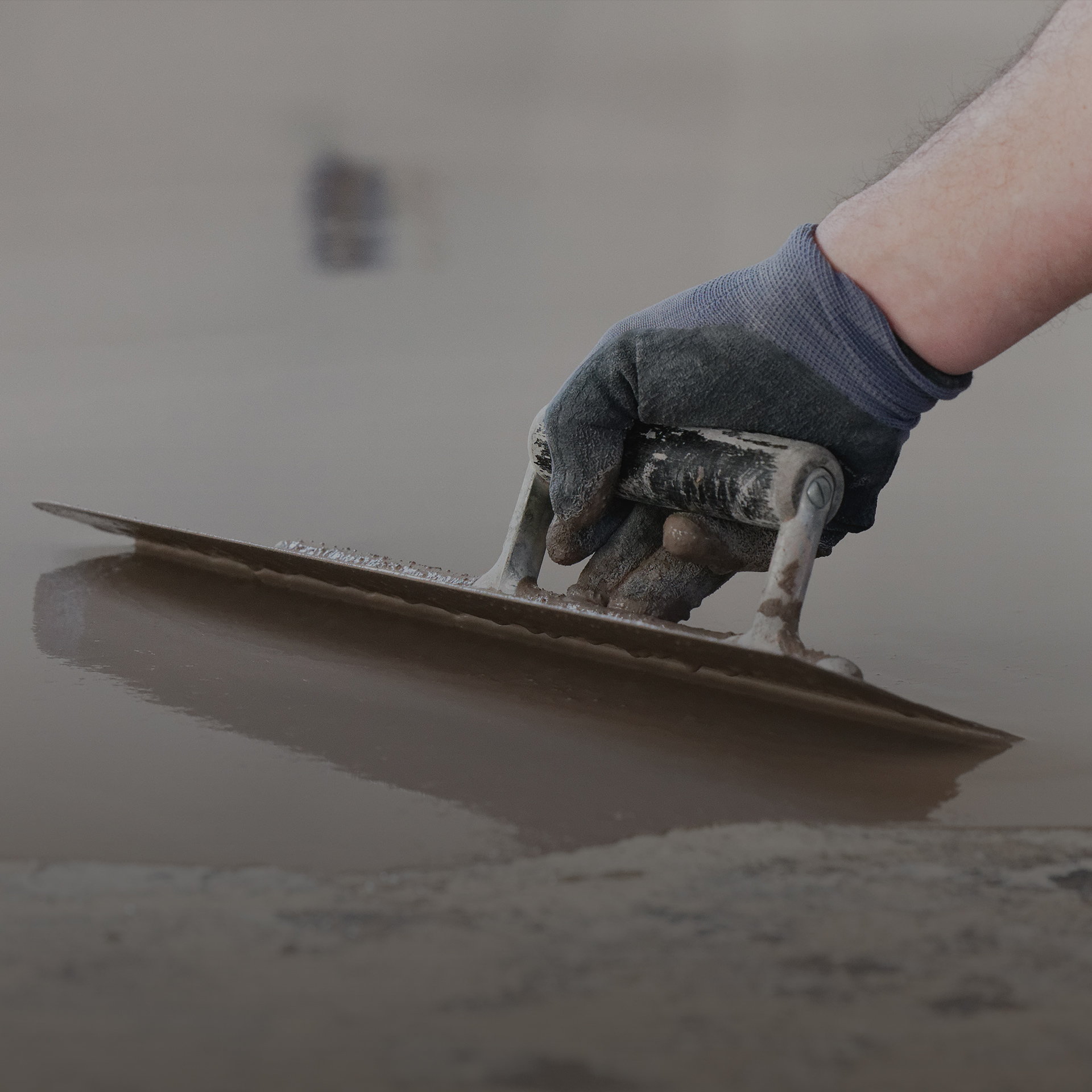
weber.xerm 860
Product formerly named: KMH Flex
weber.xerm 860
Flow-grade adhesive for void-free bedding of tiles and natural stones, with variable consistency
Colour:
grey
Bed thickness:
up to 10 mm
Water demand:
approx. 6.0 - 7.5 liters / 25 kg
Storage:
The product can be stored for at least 18 months in its original unopened packaging if kept dry and protected from moisture.
Fields of application
weber.xerm 860 is used for laying wall and floor ceramic tiles indoors and outdoors, as well as non-moisture (discoloration)- sensitive natural stone tiles, mosaics, porcelain stoneware, split tiles, terracotta and artificial stones (for ex. terrazzo).
The trass content offers increased protection against lime efflorescence due to wet exposure indoors and outdoors, as well as when laying natural tiles or slabs.
Can be used as both thin-bed and medium-bed adhesive, and enables efficient works on large surfaces.
Suitable for laying in damp, wet-duty and cold storage rooms as well as in underwater areas.
The following substrates are allowed: cement and anhydrite screeds (heated and non-heated), electric underfloor heating, concrete, mastic asphalt (indoors), gypsum paperboards and gypsum fiberboards, rigid foam boards and lightweight multi-use tilebackers weber.sys 834.
weber.xerm 860 can also be applied to the Weber bonded waterproofing solutions weber.tec 822 (1-comp. liquid foil), 824 (1-comp. cement-based slurry), Superflex D 2 and weber.xerm 844 (2-comp. quick-setting and reactive compounds) and weber.tec 827/827 S (2-comp. epoxy resins).
When reducing the water dosage, the product can also be used as thin-bed mortar on skirtings and small-size wall areas.
For use indoors and outdoors.
Main features
- class C2 TE / S1: C2: pull-off strength ≥ 1.0 N/mm2 after all storage conditions – T: thixotropic, slip ≤ 0.5 mm – E: extended open time ≥ 30 minutes – S1: deformation ≥ 2.5 mm
- contains trass
- for economical tile fixing on floors
- extended open time
- can be applied in different consistencies
- enables full-saturation and void-free application: replaces the buttering-floating method
- provides optimal bedding on the backside of coverings
- most suitable for porcelain stoneware
- can be particularly used for large-size tiles and slabs
- suitable for heated floor constructions
General notes
- Limits of use: do not use weber.xerm 860 for bonding “tile on tile” outdoors, in permanently wet areas and in areas permanently underwater (without waterproofing); in these cases, use the epoxy resin adhesive weber.xerm 847.
- Neither use for bonding the impact sound insulation and de-coupling boards weber.sys 830 and sys 832 on the floor, nor for fixing tiles, slabs and natural stones on top.
- For full information relating to allowed substrates and tile coverings, refer to the Weber chart “Overview Tile Adhesives”.
- All characteristics mentioned in this data sheet are based on a temperature of +23 °C without draught and a relative humidity rate of 50%.
- Higher temperatures and lower humidity rates accelerate, lower temperatures and higher humidity rates delay the setting process.
- Comply with the national standards and/or guidelines, for ex. DIN 18157 “Execution of tilings and coverings by thin-bed method with cement-based mortars” and the leaflets of ZDB (Central Association of the German Construction Industry); if not issued and if necessary, request technical advice.
- Take preliminary measures before fixing coverings on wooden (timber planks) or metal substrates, for ex. with de-coupling boards combined with a self-levelling mortar or an epoxy resin broadcasted with silica sand etc. Request technical advice.
- For installation of natural or artificial stone slabs, follow the supplier’s recommendations. If in doubt, carry out preliminary tests.
- Respect the maximum residual moisture content of the substrate moisture at the time of iinstallation of ceramic coverings and natural stones; it should not exceed 2.0 CM-% (by weight) in case of heated or non-heated cement screeds, 0.5 CM-% (by weight) in case of heated or non-heated anhydrite screeds, 1.0 CM-% (by weight) in case of gypsum plasters, and air-dry for cement and cement-lime renders/plasters. The moisture content must be measured with a carbide hygrometer (CM) as a rule.
- Do not install tiles, slabs or natural stones that have been stored damp, wet, or too cold.
- Protect the structure from moisture until the tile adhesive has completely set.
- Do not use a material that has already stiffened.
Special notes
- When levelling substrates with low compressive strength and bulk density (e.g. gypsum plasters lightweight plasters, aerated concrete, etc.), calcium sulphate screeds or mastic asphalt screeds, apply the tile adhesive in a maximum thickness of 3 mm.
- Do not use in contact with non-ferrous metals, such as aluminium, copper, lead or zinc. Used stainless steel components, e.g. rails and edge protector angles.